Breaking: Israel Launches Preemptive War on Iran - Strikes Hit Tehran on February 28, 2026
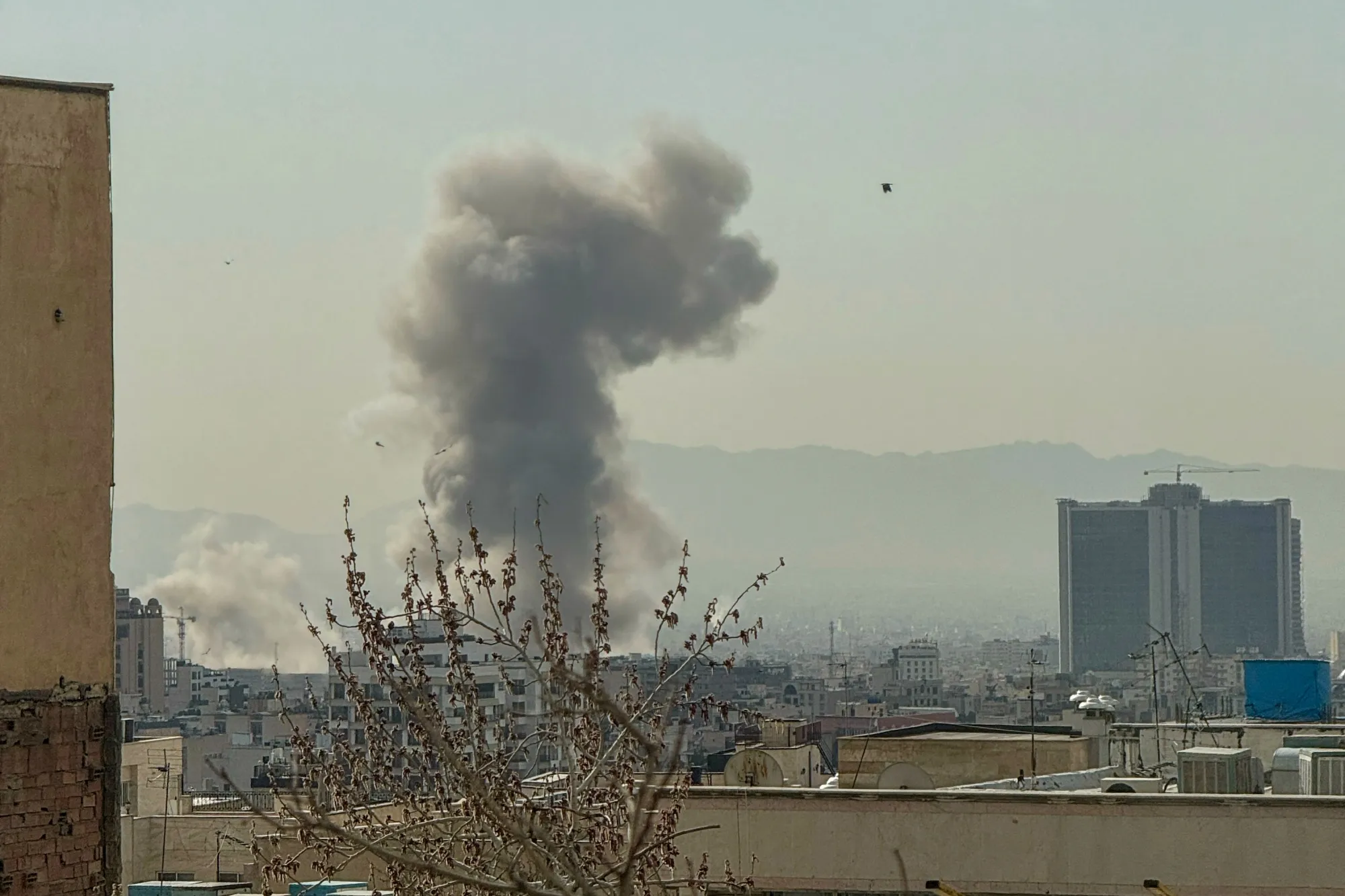
Introduction to the Israel-Iran Conflict Escalation
In a dramatic escalation that has sent shockwaves across the globe, Israel has initiated a preemptive military strike against Iran on February 28, 2026. According to statements from Israeli Defense Minister Israel Katz, the operation was launched to neutralize imminent threats from Iran, including potential missile attacks and nuclear advancements. This marks the second major confrontation between the two nations in less than a year, following the brief but intense Twelve-Day War in June 2025.
Reports from multiple sources, including CNN, Reuters, and The New York Times, confirm that explosions rocked Tehran early this morning, with smoke plumes visible across the city's skyline. The United States has been implicated in the strikes, with anonymous officials stating that American forces participated in the joint operation. This development has raised fears of a broader regional war, potentially involving other Middle Eastern powers and even global superpowers.
As of 12:36 PM IST, air raid sirens blared across Israel, and a state of emergency was declared nationwide. Civilian flights have been suspended in both Israel and Iran, and international markets are reacting with volatility, particularly in oil prices. This article delves into the background, details of the strikes, international reactions, and potential implications, drawing from real-time tweets and verified images to provide a comprehensive overview.
Background: From Proxy Conflicts to Direct War
The tensions between Israel and Iran have simmered for decades, rooted in ideological differences, regional power struggles, and Iran's support for proxy groups like Hezbollah and Hamas. The proxy war escalated into direct confrontation in June 2025, when Israel bombed Iranian nuclear facilities, leading to the Twelve-Day War. That conflict ended in a fragile ceasefire under U.S. pressure, but underlying issues—particularly Iran's nuclear program—remained unresolved.
According to the Critical Threats Project, Iran had amassed over 400 kilograms of uranium enriched to 60% before the 2025 war. Post-ceasefire, Iran continued to reject zero-enrichment demands and rebuilt parts of its ballistic missile infrastructure, including protective structures at sites like Khojir and Parchin. These developments, coupled with threats from Iranian-backed militias in Iraq and Syria, prompted Israel to act preemptively.
In the lead-up to today's strikes, U.S. President Donald Trump issued warnings to Iran, amassing forces in the Middle East. Negotiations in Geneva faltered, with Iran refusing U.S. demands to dismantle nuclear facilities. On February 27, 2026, reports from ACLED highlighted the looming threat, predicting a potential U.S.-Israel joint operation if diplomacy failed.
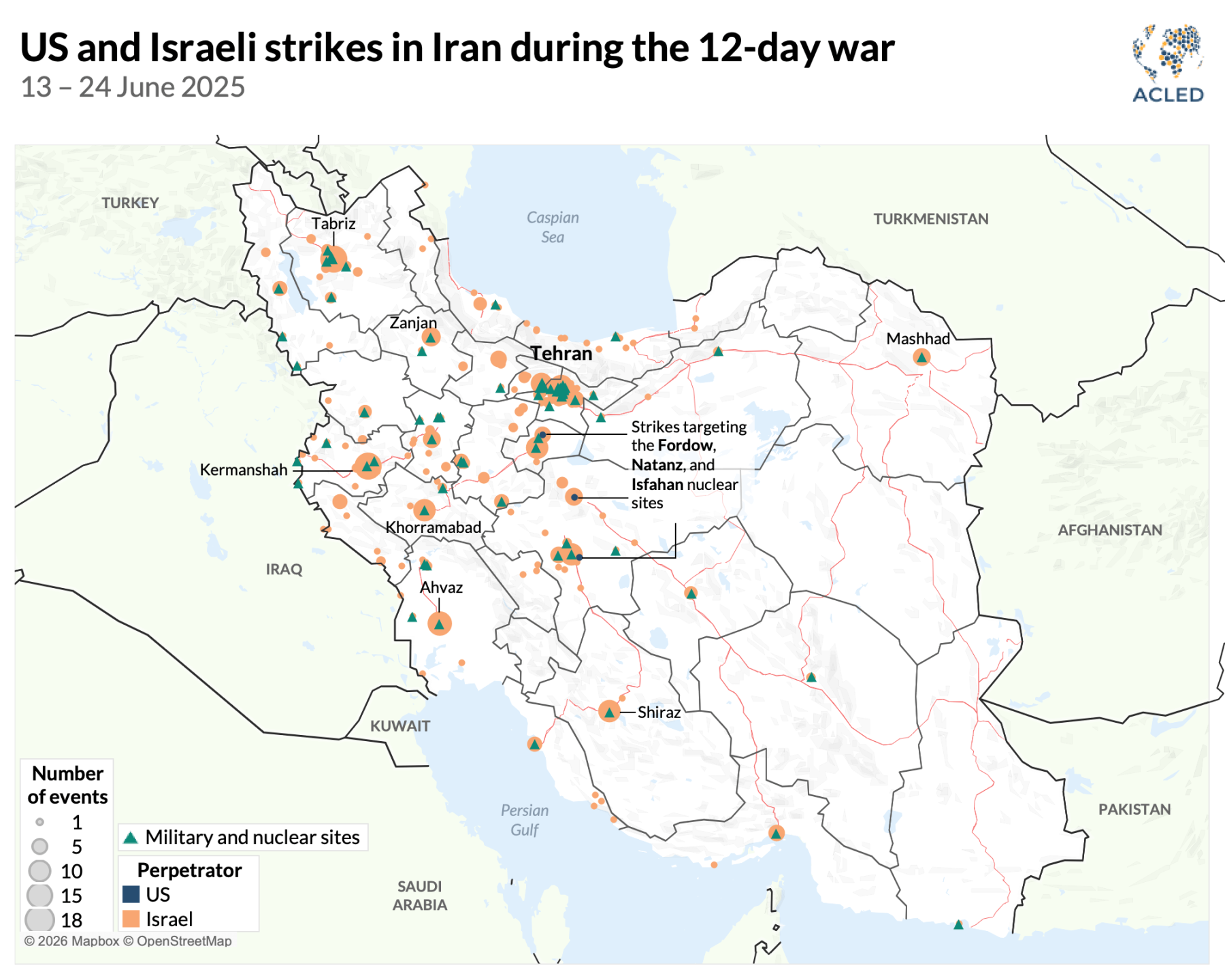
The 2025 war saw over 380 Israeli strikes on Iranian targets, killing senior commanders and destroying key assets. However, Iran retained its enriched uranium stockpile and technical expertise, setting the stage for today's events. Experts like those from the Institute for Science and International Security note that sites like Taleghan 2 were hardened against airstrikes, making a repeat operation more challenging.
Details of the February 28, 2026 Strikes
The strikes began around 1:28 AM ET (approximately 11:58 AM IST), with Israeli and U.S. forces targeting military installations in Tehran and other provinces. Witnesses in Tehran reported multiple explosions, with smoke rising from central areas, including near the presidential office. Al Jazeera confirmed that air raid sirens were activated in Israel in anticipation of Iranian retaliation via drones and ballistic missiles.
Reuters reported that the operation aimed to "remove threats to the State of Israel," focusing on missile production complexes and nuclear-related sites. A U.S. official told Al Jazeera that the strikes were joint, pushing the Middle East into renewed confrontation. Visual evidence from Tehran shows thick smoke columns against the city skyline, corroborating reports of direct hits.
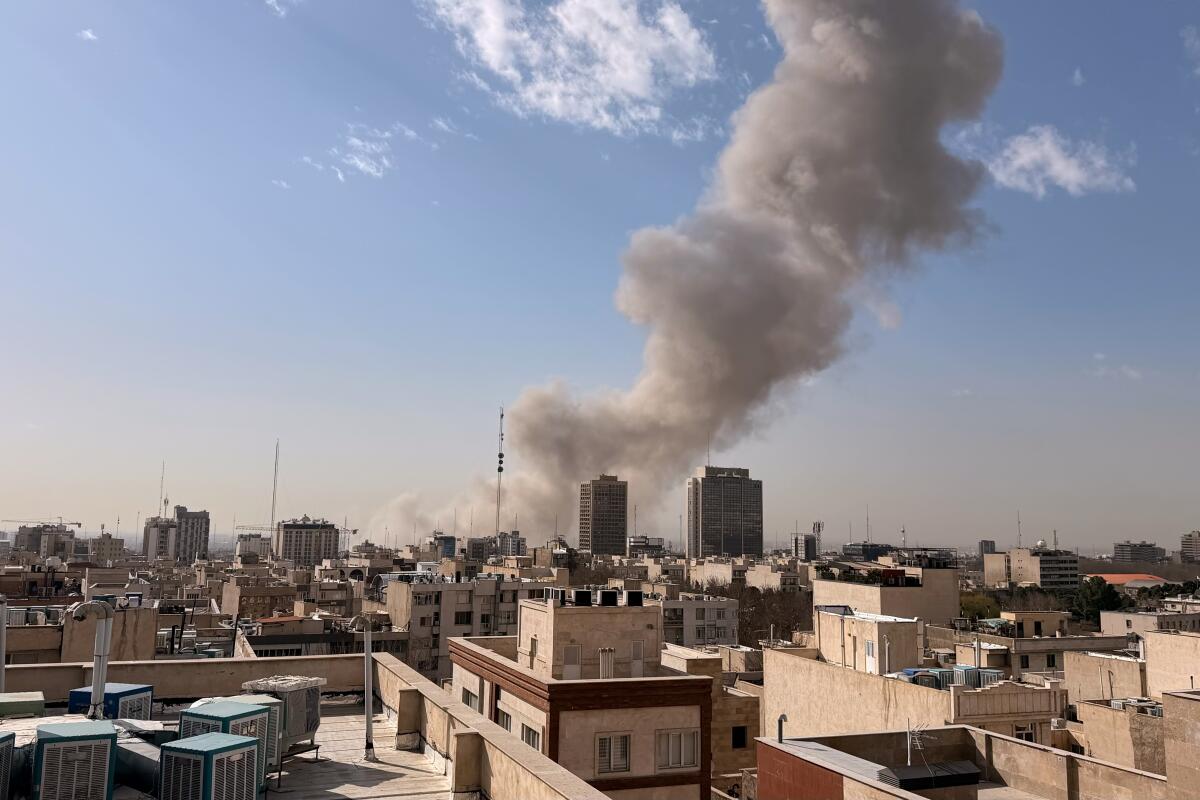
According to The Associated Press, the U.S. participation marks a significant escalation, unauthorized by Congress as noted by Representative Thomas Massie. Iranian state media has yet to confirm casualties, but initial estimates suggest damage to key infrastructure. Israel's military sounded protective air raid sirens nationwide, preparing for possible incoming missiles.
This operation echoes the 2025 strikes, where the U.S. targeted Iran's three main nuclear facilities. However, today's attacks appear more targeted at command centers in Tehran, potentially aiming to decapitate leadership or disrupt retaliation capabilities.
Global and Regional Reactions
The international community has reacted swiftly. The United Nations called for an immediate ceasefire, while European leaders expressed concern over regional stability. Oil prices surged by 5% in early trading, reflecting fears of disrupted supplies from the Persian Gulf.
In the U.S., political figures are divided. President Trump justified the strikes as necessary to prevent Iran from acquiring nuclear weapons, but critics like Massie decried them as "acts of war unauthorized by Congress." Iranian officials vowed retaliation, with state media reporting mobilization of forces.
Protests and demonstrations have erupted worldwide. In Israel, supporters rallied with banners reading "Brave People of Iran, Israel Stands With You Until Freedom." Iranian expatriates echoed calls for regime change, hoping the strikes weaken the Islamic Republic.

ACLED experts warn that Iran could impose significant costs, as seen in the 2025 war when over 500 missiles were launched at Israel, causing dozens of casualties. Iraqi militias like Kataib Hezbollah threatened attacks on U.S. interests, complicating the situation further.
Real-Time Updates from Social Media
Social media platforms, particularly X (formerly Twitter), are abuzz with eyewitness accounts and analyses. Here are some key tweets capturing the moment:
BREAKING: War on Iran starts.
— Suzume (@Suzume_0_7) February 28, 2026
Israel has just hit Tehran , the capital of Iran
BIG BREAKING NEWS
— Jai Hind (@AumSaiNath23) February 28, 2026
3 Big explosions in Iran capital Tehran short while ago, war to start definitely tonight by USA and Israel.
BREAKING: War on Iran starts.
— 𝕯𝖊𝖋𝖊𝖓𝖉𝖊𝖗🛡️🇳🇬 (@diponet1) February 28, 2026
Israel has just hit Tehran.
USA will be drawn in..
REGIME CHANGE MUST BE ANOTHER CONDITION CONDITION NOT SPOKEN AND ASKED OF. It's going down already.
Prices of oil are about to go up slightly while Venezuela 's oil 🛢️is the shock absorber!
If they targeted Khamenei, there is no going back for Iran.
— C. Wright Mills (@millsianism) February 28, 2026
They will retaliate and mobilize for war. Israel has leaped over the escalation ladder.
#BREAKING: War started between Iran and Israel. '🇮🇱🇮🇷'
— UNN (@mahrosh9091) February 28, 2026
These tweets reflect the rapid dissemination of information and public sentiment, ranging from alarm to calls for regime change in Iran.
Analysis: Potential Outcomes and Global Impact
The strikes could lead to several scenarios. A limited exchange might end with another ceasefire, but Iran's threats of unrestricted response suggest escalation. Experts predict Iranian retaliation targeting Israeli cities like Tel Aviv and Haifa, potentially causing thousands of casualties.
Economically, disruptions in the Persian Gulf could spike oil prices, affecting global markets. Geopolitically, involvement of powers like Russia or China could broaden the conflict. The U.S.'s role raises domestic debates on congressional authorization for war.
For Israel, this is a high-stakes gamble to curb Iran's nuclear ambitions. Prime Minister Benjamin Netanyahu, a long-time advocate against Iran's program, stated Israel would fight "for as many days as it takes." Images from his past UN speeches, like the infamous bomb diagram, underscore his stance.

Iran's response could involve proxy attacks on U.S. bases or cyber warfare. The Kurdistan Regional Government has denied allowing its territory for strikes, but threats from Iraqi militias persist.
Conclusion: A Precarious Path Forward
As the world watches, the Israel-Iran war of 2026 unfolds with uncertain consequences. The preemptive strikes on February 28 mark a critical juncture, potentially reshaping the Middle East. Calls for diplomacy remain, but with explosions in Tehran and sirens in Israel, peace seems distant.
Stay tuned for updates as this story develops. For more on the Israel-Iran conflict 2026, follow our blog.