Taliban Legalizes Wife Beating: Afghanistan's Shocking 2026 Penal Code and the World's Outcry
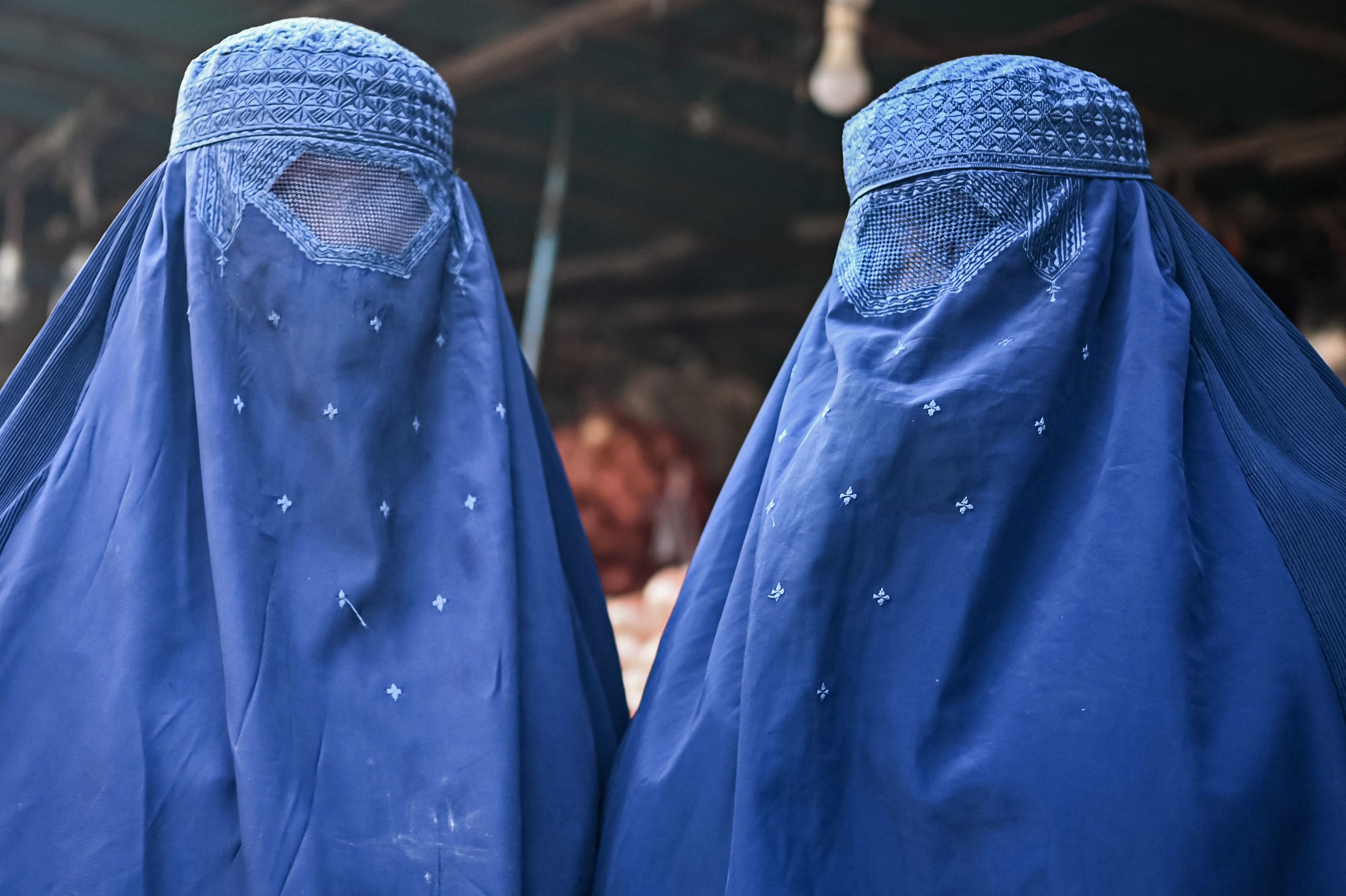
Afghan women under Taliban rule — a daily reality of fear, restriction, and now legally sanctioned violence.
In a move that has shocked the international community and deepened the plight of women in Afghanistan, the Taliban has enacted a new penal code that effectively legalizes domestic violence against wives and children — provided no bones are broken or open wounds inflicted. Signed by the group's supreme leader, Hibatullah Akhundzada, on January 7, 2026, this 90-page document, titled the De Mahakumu Jazaai Osulnama or "Criminal Procedure Code for Courts," has been circulated to provincial courts for immediate implementation across the country.
The code not only permits husbands to physically punish their wives and daughters but also erects near-impossible barriers for any woman seeking justice — effectively making the family home a legal cage. The revelation, first published by Kabul-based human rights organization Rawadari on January 21 after they obtained the original Pashtu document, triggered an immediate global firestorm. The United Nations, world governments, human rights organizations, and prominent public figures lined up to denounce what many are now openly calling gender apartheid — a legally enforced system of sex-based oppression that has no parallel anywhere in the world in 2026.
This is the full story of what that code says, who it is already hurting, and why the world's outrage — however loud — is struggling to find an answer powerful enough to reach inside Afghanistan's courts.
"No Broken Bones, No Crime": What the Code Actually Says
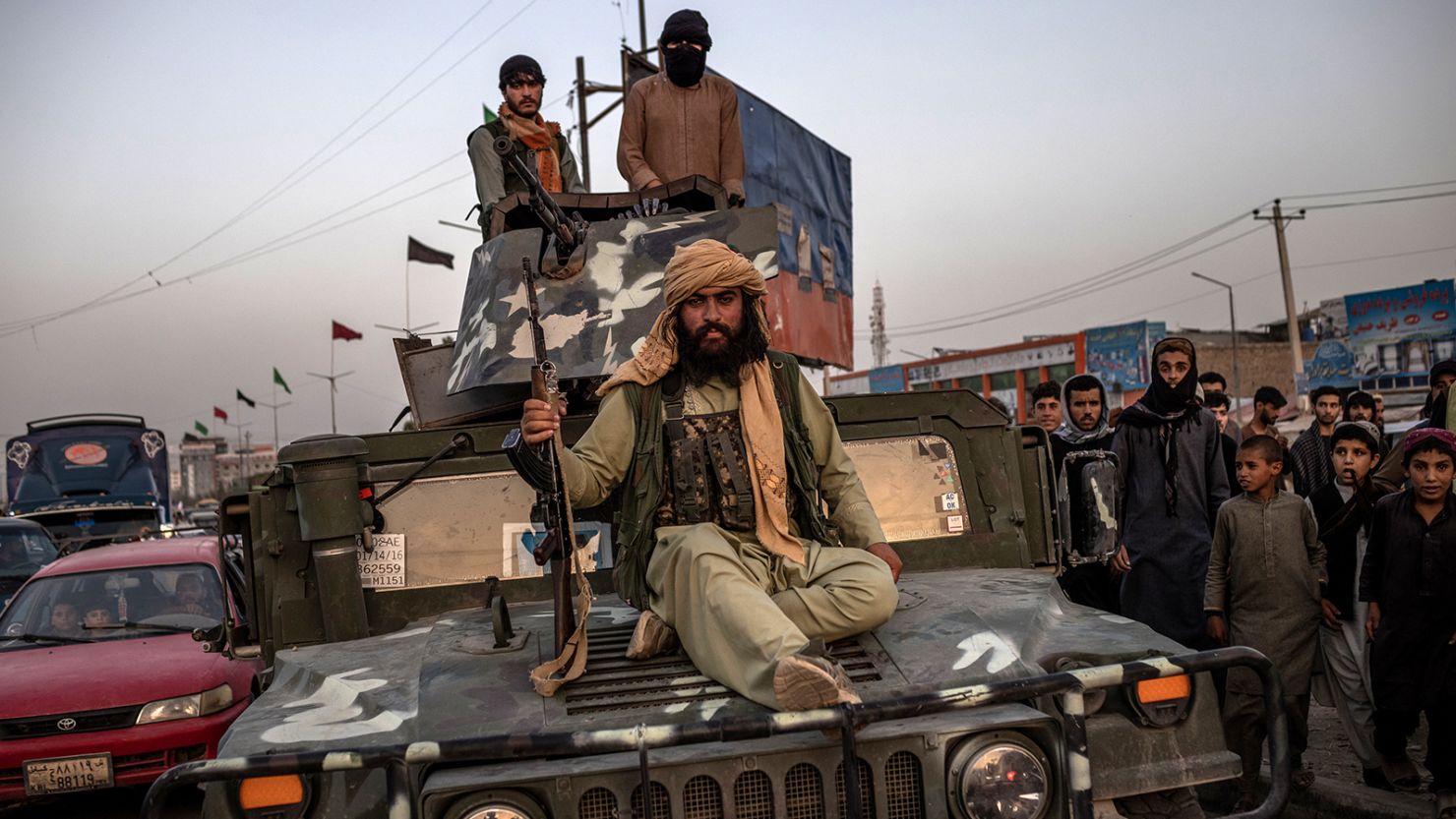
Taliban fighters patrol Afghan streets, enforcing a legal system that now formally sanctions violence against women.
The penal code spans 119 articles across three sections and ten chapters. The international horror has focused primarily on two provisions: Articles 32 and 34 — which together represent the most explicit legal codification of domestic violence that any government anywhere in the world has attempted to formalize in recent history.
Article 32 states that if a husband strikes his wife resulting in a fracture, injury, or bruising, and the wife can prove her claim before a judge, the husband faces a maximum sentence of just 15 days in prison. Read the logic carefully — this does not prohibit beating. It only punishes "excessive" beating that leaves visible fractures or open wounds. Any beating short of that threshold is, under this law, entirely legal. Classified as ta'zir — discretionary punishment — a husband's right to physically strike his wife is not a crime. It is a right.
The burden of proof clause makes the already-minimal bar functionally unreachable for nearly every Afghan woman. To report abuse under this code, a woman must appear in court in person to display her injuries — while remaining fully covered under Taliban dress codes, and while accompanied by a male guardian who is very likely the same man who abused her. Georgetown's Institute for Women, Peace and Security noted one additional detail that reveals the code's moral framework with devastating clarity: harm to animals carries a harsher legal penalty than domestic abuse of a wife. That is not a rhetorical flourish. It is a direct reading of the document's own sentencing structures.
Article 34 goes further still. If a woman repeatedly visits her parents or relatives without her husband's consent, or refuses to return home on his demand, she faces three months in prison — and criminal liability extends to any family member who sheltered her. In plain terms: if a woman flees domestic abuse and her parents take her in, both she and her parents can be imprisoned. The last informal safety net for abused Afghan women — the family home — has been made a crime scene.
The code also explicitly references slavery, repeatedly using the term "Ghulam" (slave) and granting "masters" the authority to impose discretionary punishments — effectively incorporating a slavery framework into a national legal system in 2026. It establishes a social hierarchy where religious scholars face no criminal consequence whatsoever, while those at the bottom of the class structure face corporal punishment for equivalent offenses. Criticizing the code itself is a criminal offense. Discussing it publicly is prohibited. The law not only enshrines violence — it forbids Afghans from protesting it.
Voices From Inside: What Afghan Women Are Saying
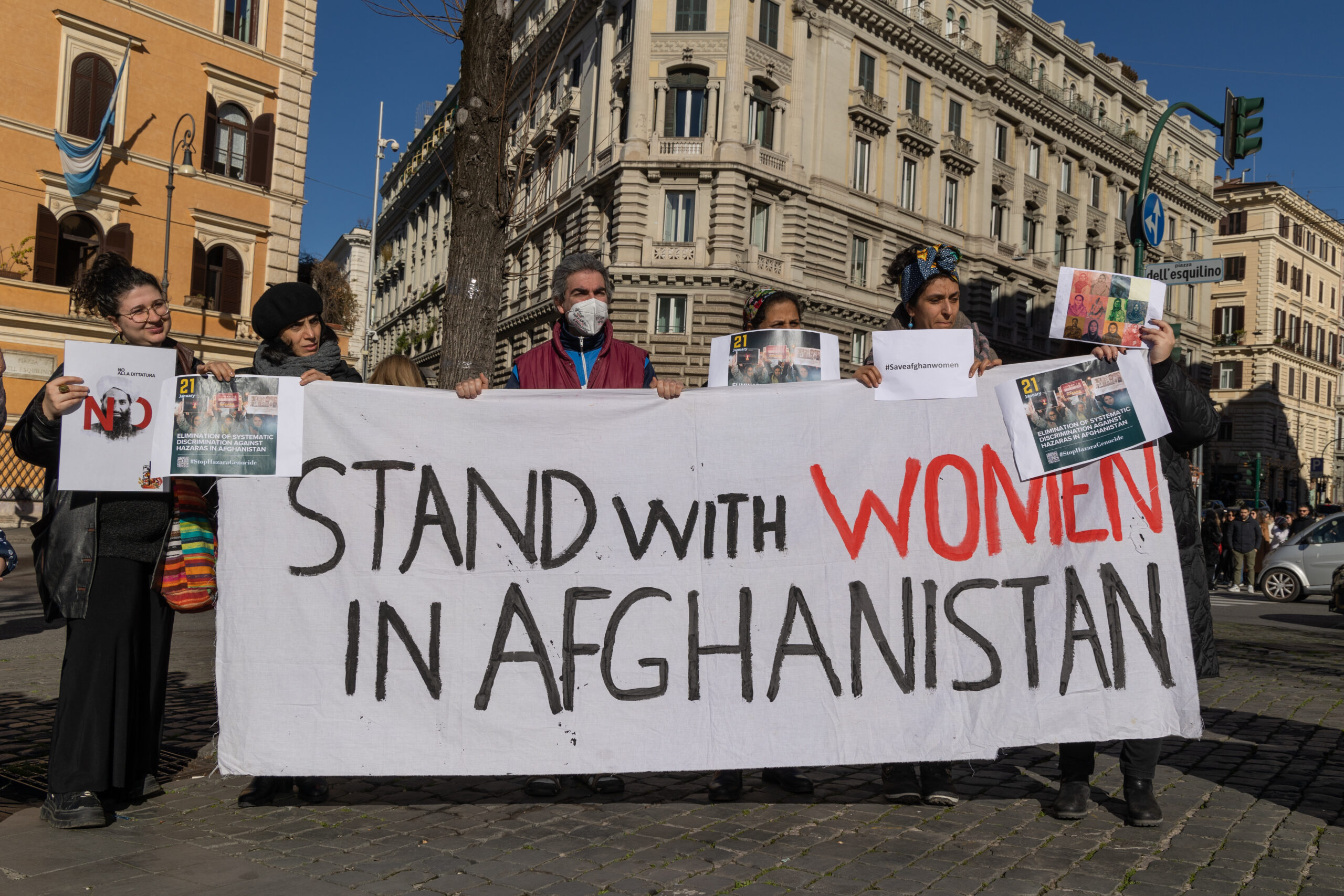
Afghan women and international advocates protest the Taliban's systematic erasure of women's rights.
The voices of Afghan women themselves — those still inside the country and those who have escaped to speak from exile — cut through the legal abstractions with painful clarity.
Zarqa, a 34-year-old former schoolteacher in Kabul who asked that her full name not be published for her safety, described her situation to a human rights researcher in February 2026: "My husband now tells me openly that the law is on his side. He says this in front of our children. What do I tell my daughter, who is twelve and has not been to school in five years? That the law says her body belongs to her father and then her husband, and that is all she is worth?"
Fawzia Koofi, the former Afghan member of parliament who has continued speaking out from exile in Europe, framed the code as the culmination of a deliberate strategy: "This is not culture. This is not religion. This is a political project to eliminate women from public life entirely — and now from the protection of the law itself. They are not done. Every time the world expresses outrage and does nothing, they go further."
Mahbouba Seraj, the Afghan women's rights activist and CNN Hero, who remained in Kabul longer than almost any other prominent advocate before eventually leaving, described the psychological toll in stark terms: "The women of Afghanistan are not broken. But they are being erased — from schools, from courts, from streets, from sound. A woman cannot even let her voice be heard through her own window. And now the law says her husband may beat her, and this is not a crime. Tell me — what word is there for this other than annihilation?"
These are not abstract policy concerns. They are the lived reality of approximately 20 million Afghan women and girls who wake up every day inside a legal system that has formally declared their bodies available for punishment and their autonomy a criminal offense.
What This Code Replaced — and Why That Matters
The 2026 penal code did not emerge into a legal vacuum. It deliberately replaced protections that Afghan women had spent years fighting to establish. Most critically, it officially repeals the 2009 Elimination of Violence Against Women (EVAW) law — the landmark legislation that had criminalized forced marriage, prosecuted domestic violence, and provided the legal foundation for women's protection in Afghanistan for over a decade.
The EVAW law was imperfect and unevenly enforced, particularly in rural areas. But it represented a legal principle — that women had rights worth protecting, and that the state had an obligation to defend them. That principle has now been formally erased and replaced with its opposite: a legal framework that protects the perpetrator of violence, not the victim.
The code also scraps all previous legislation protecting women's rights, replacing it with a framework in which the Taliban's interpretation of religious law is the sole arbiter of what women may do, where they may go, and what may be done to their bodies. Human rights groups describe it as the completion of a legal transformation that began the moment the Taliban seized Kabul in August 2021 — the systematic conversion of Afghanistan's legal system from one that, however imperfectly, recognized women as rights-bearing persons, to one that recognizes them primarily as dependents subject to male authority.
Afghanistan vs. Saudi Arabia: A Comparison the Taliban Hates
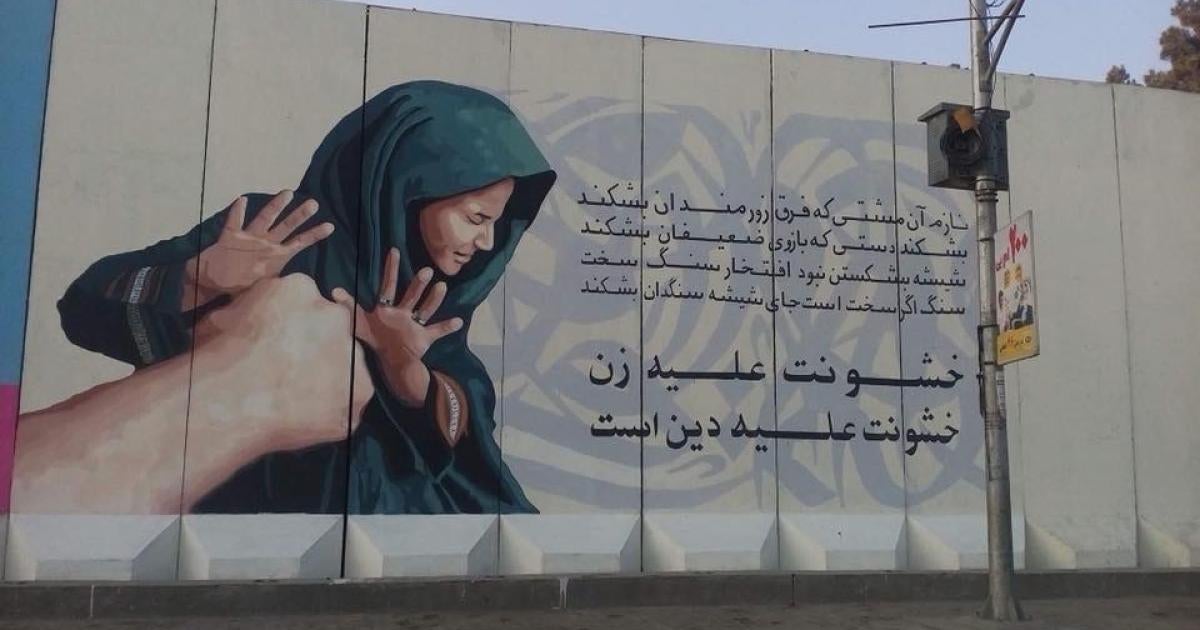
A mural in Afghanistan depicting the reality of gender-based violence — now formally sanctioned by law.
The Taliban frequently invokes Islamic law as the justification for its treatment of women. But a direct comparison with Saudi Arabia — a country that governed under a conservative interpretation of Islamic law for decades — exposes the Taliban's framework for what it actually is: not religious observance, but political extremism dressed in religious language.
Saudi Arabia, just a decade ago, was itself one of the world's most restrictive countries for women. Women could not drive, could not travel without male guardian permission, and faced extensive social segregation. Yet between 2017 and 2023, the Kingdom underwent a remarkable transformation under Vision 2030: women gained the right to drive in 2018, the guardianship system was significantly reformed in 2019, women were permitted to obtain passports and travel independently, and they began entering the workforce in large numbers — with female labor force participation rising from 17% in 2017 to over 33% by 2024. Women now attend football matches, perform at concerts, and hold senior government positions. Saudi Arabia is still far from a model of gender equality — but the direction of travel is unmistakable, and it demonstrates conclusively that conservative Islamic governance is not inherently incompatible with expanding women's rights.
The Taliban has moved in the precisely opposite direction. Where Saudi Arabia dismantled its male guardianship system, the Taliban codified and criminally enforced it. Where Saudi Arabia opened schools, stadiums, and workplaces to women, the Taliban closed them. Where Saudi Arabia removed domestic violence from the realm of private "discretion" and began criminalizing it, the Taliban has formally reclassified it as a husband's legal right. The contrast is not subtle. It is total. And it makes clear that what is happening in Afghanistan is not the result of Islamic law — it is the result of a specific political movement that has chosen to use religion as the instrument of total authoritarian control.
Legal scholar and former Afghan Supreme Court Justice Najla Rahimi, speaking from exile in Germany, put it bluntly: "Saudi Arabia, which the Taliban claims as a model, has moved forward for women. The Taliban has gone backward. They are not following Islam. They are using Islam to build a prison."
The Global Outcry: "Will Anyone Stop Them?"
When Rawadari published the penal code and international media began translating its provisions in February 2026, the global reaction was swift and fierce. UN Special Rapporteur on violence against women Reem Alsalem wrote on X: "The implications of this latest code for women and girls is simply terrifying. The Taliban have understood correctly that no one will stop them. Will the international community prove them wrong? And if so, when?"
That question — when? — has become the defining challenge of the international response. Condemnation has been universal. Concrete action has been limited. Rawadari urged the United Nations and international bodies to immediately halt implementation and use all available legal instruments to prevent enforcement. The Georgetown Institute for Women, Peace and Security published a detailed analysis describing the code as legalizing "slavery, violence, and repression." Human Rights Watch called for the formal recognition of Taliban governance as gender apartheid under international law.
Indian lyricist and public intellectual Javed Akhtar posted on X on February 21, 2026: "Talibans have legalised wife beating but without any bone fracture. If a wife goes to her parent place without her husband's permission, she will be jailed for three months. I beseech the Mufties and mullas of India to condemn it unconditionally because it all is being done in the name of their religion." His words sparked fierce debate across South Asia, with the Population Foundation of India calling the law "shocking and dangerous."
Four countries — Germany, Australia, Canada, and the Netherlands — have initiated legal proceedings against the Taliban at the International Court of Justice for violations of CEDAW, the Convention on the Elimination of All Forms of Discrimination Against Women. The Taliban's spokesman dismissed the proceedings as "absurd," claiming that "human rights are protected in Afghanistan." The proceedings continue, measured in years rather than weeks, while the penal code is enforced today.
The Scale of the Crisis: Numbers That Cannot Be Ignored
The statistics underpinning the Taliban's rule are staggering in their human cost. UN data indicates that 90% of Afghan women experience some form of domestic abuse. Over 2.2 million girls remain barred from secondary education since 2021 — the largest single gender-based education exclusion in the world. More than 50 edicts targeting women and girls have been issued since August 2021. Half of Afghanistan's population faces food insecurity. Mental health crises — depression, anxiety, and suicide attempts among women — have surged to levels that overwhelm the country's already-devastated healthcare infrastructure.
The economic consequences compound the human ones. Before 2021, women constituted a growing share of Afghanistan's workforce, particularly in healthcare, education, and civil society. Their exclusion has removed a critical pillar of the Afghan economy at precisely the moment when the country needs every available human resource to rebuild from four decades of war. The World Bank estimates Afghanistan's GDP has contracted by over 30% since the Taliban takeover, with the exclusion of women from economic life identified as a primary structural driver of that collapse.
None of this has slowed the Taliban's legislative agenda. If anything, the trajectory has accelerated. Each condemnation from the international community has been followed not by concession, but by the next restriction. The penal code of January 2026 is not the end of that trajectory. It is a milestone along it.
What Must Happen Next
The scale of the challenge does not make action impossible — it makes it more urgent. Human rights advocates and legal scholars have outlined concrete steps that go beyond the statements of condemnation that the Taliban has shown it can absorb without consequence.
The ICJ proceedings must be expanded — more countries need to formally join Germany, Australia, Can