KOSPI Up 76%: Why South Korea's Stock Market Is the World's Biggest Winner Right Now

Published: February 17, 2026 | Category: Markets & Economy | Reading Time: 10 minutes
There's a moment every few years when one corner of the global market does something so extraordinary that even the most seasoned fund managers stop and stare. In 2025, that moment belonged to South Korea. The benchmark KOSPI index — the barometer of Seoul's stock market — surged a staggering 76% for the year, the best performance among all major global indices. Not the Nasdaq. Not Japan's Nikkei. Not any market in Europe. South Korea.
And here's what makes it even more remarkable: it hasn't stopped. As of mid-February 2026, the KOSPI is trading around 5,500 points — a level that would have seemed like pure fantasy just 18 months ago when the index was sitting below 2,400, bruised and beaten after a year-end political crisis. The comeback is nothing short of astonishing, and the investors who moved early are sitting on life-changing returns.
So what exactly happened? The short answer is a perfect storm of artificial intelligence, political reinvention, corporate governance reform, and a global recognition that Korean companies had been dramatically undervalued for decades. The long answer is what we're about to dig into — because if you're an investor, or even just someone trying to understand where the world's capital is flowing in 2026, South Korea is the story you cannot afford to ignore.
The Low That Made the High Possible
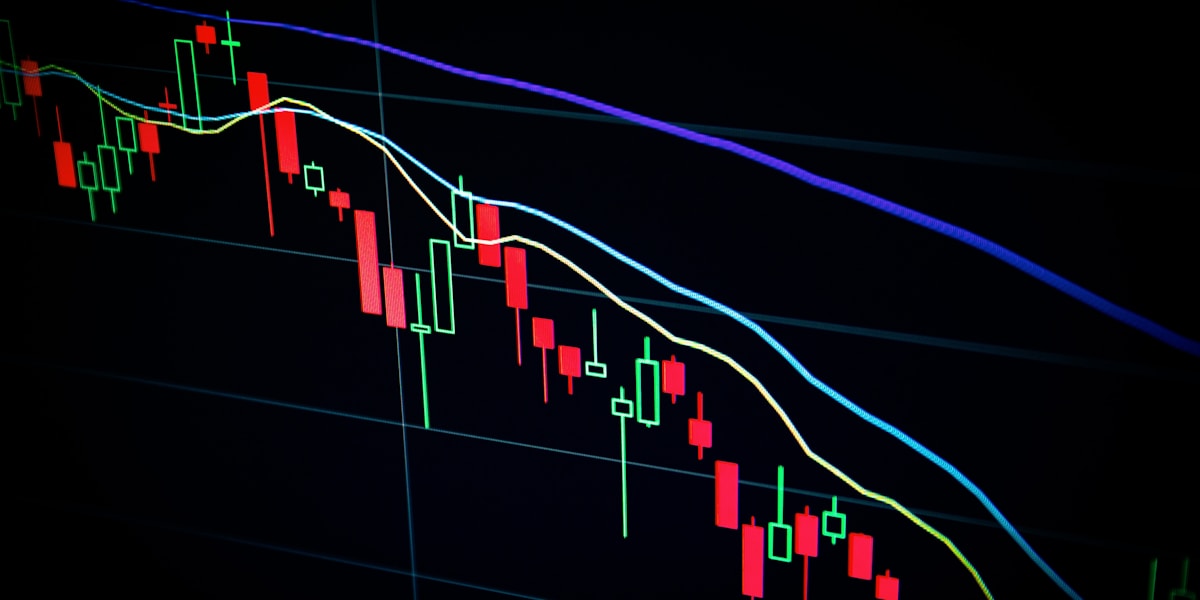
To understand the rally, you first need to understand how bad things were. In December 2024, the KOSPI closed the year at just 2,399 — down nearly 10% for the year. The political turmoil was real and jarring: President Yoon Suk Yeol had stunned the nation and global markets by briefly declaring martial law before being impeached. Foreign investors, already cautious about South Korea's notoriously opaque corporate structures, pulled money out fast. The won weakened. Headlines were grim.
But here's the thing about low points — they create extraordinary entry opportunities for those willing to look past the panic. And the institutional money that poured in from mid-2025 onward clearly saw something the panicked sellers didn't. South Korea's underlying economic engine hadn't broken. It had simply been obscured by political noise. Once a new government took office under President Lee Jae-myung in June 2025 — with a direct, explicit mandate to drive the KOSPI toward 5,000 — the mood shifted completely.
The KOSPI crossed 3,000 for the first time in three and a half years on June 20, 2025. By late October, it had blown past 4,000. It finished 2025 at 4,214. It opened 2026 above 4,300. Today it sits above 5,500. That's a market that more than doubled from its December 2024 lows in roughly 14 months — one of the fastest re-ratings of any major global index in recent memory.
The AI Chip Supercycle: Samsung and SK Hynix Are Everywhere
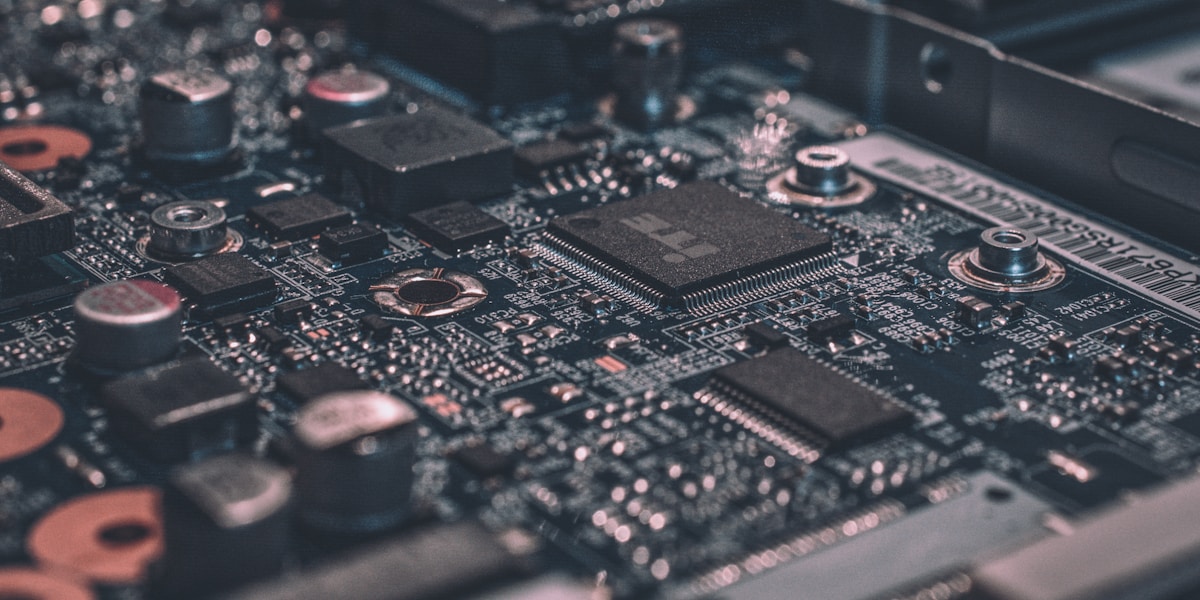
You cannot talk about the South Korean market without talking about memory chips. The country's two semiconductor giants — Samsung Electronics and SK Hynix — have become the most critical suppliers in the global artificial intelligence infrastructure buildout. Every major AI system, from Nvidia's H100 and H200 GPUs to Google's Tensor Processing Units and Amazon's Trainium chips, requires High Bandwidth Memory, or HBM. And Samsung and SK Hynix make the vast majority of it.
Together, these two companies hold roughly 80% of the world's HBM market share. As AI demand exploded through 2024 and into 2025, memory chip prices followed. SK Hynix's stock surged approximately 278% in 2025 alone. Samsung's shares delivered around 130%. The two companies now account for over 52% of total KOSPI net profits in 2026 forecasts, according to Macquarie Research — and an estimated 68% of the projected profit growth across the entire index.
The memory crunch isn't easing either. Macquarie analyst Daniel Kim put it bluntly in a late 2025 research note: the industry is experiencing "the worst memory crunch in history and we see no signs of easing supply in the next two years." When supply is tight and demand is exploding because every tech giant on earth is racing to build AI infrastructure, the companies sitting on the critical supply become extraordinarily valuable. Samsung and SK Hynix recently raised their HBM3E prices by nearly 20% for 2026 contracts — an unusual move at any stage of a chip cycle when prices would normally be expected to soften.
Google's seventh-generation TPU uses eight HBM3E stacks per chip. Amazon's Trainium3 uses four. Nvidia's latest AI accelerators keep consuming more memory with each new generation. The Korean chip companies aren't just riding the AI wave — they are the AI wave. And investors worldwide are finally pricing that in correctly.
Killing the "Korea Discount" — The Reform Story Nobody Told You
Here's where the story gets genuinely interesting for anyone who follows market structure. South Korea's market had suffered for decades from what analysts call the "Korea Discount" — a persistent tendency for Korean companies to trade at significantly lower valuations than their peers in Japan, the US, or Europe, even when their fundamentals were equally strong or stronger.
The culprit was structural. South Korea's economy is dominated by massive, family-owned conglomerates called chaebols — names like Samsung, Hyundai, LG, SK, and Lotte. These groups have notoriously complex cross-shareholding structures that make it difficult for outside investors to understand what they actually own, and they historically showed little interest in rewarding minority shareholders through dividends or buybacks. Nearly 69% of KOSPI companies were trading below book value as recently as early 2024. Almost half of all listed companies were sitting on piles of cash they simply wouldn't return to shareholders. It was a governance nightmare for any serious institutional investor.
That began to change in February 2024 when the Financial Services Commission launched the Corporate Value-Up Program — South Korea's answer to Japan's successful corporate governance reform campaign that helped push Japanese stocks to all-time highs. The program encouraged listed companies to set long-term shareholder return targets, improve their price-to-book ratios, implement share buybacks, and cancel treasury shares. A "Korea Value-Up Index" was created to track the companies making the most progress.
What changed everything was the new Lee Jae-myung government doubling down after taking power in June 2025. The Commercial Act was amended to expand directors' fiduciary duties to include all shareholders, not just company insiders. Tax incentives were strengthened. The KOSPI 5,000 Special Committee was formed. Companies started genuinely responding — POSCO, Doosan Bobcat, and major banks raised dividends. Chaebols began canceling treasury shares. The culture, slowly but unmistakably, was shifting.
Fiona Yang, a portfolio manager at Invesco, told CNBC in October 2025: "Over the past two years, we've witnessed a paradigm shift in regulatory attitudes. Korean equities have historically traded at a significant discount to global markets due to concerns over corporate governance and low shareholder returns. If regulators remain committed to these value-enhancing initiatives, the market could sustain its gains." At the time she said that, the KOSPI was barely past 4,000. It's now above 5,500. She was right.
The Foreign Money Flood — and Why Domestic Investors Took Over
Foreign investors initially lit the fuse on this rally. After dumping approximately $10.5 billion worth of Korean shares in the first half of 2025, offshore investors made a dramatic U-turn, purchasing roughly $9.2 billion since autumn — the largest inflow among all major emerging markets tracked by Bloomberg. Korea flipped from being the most heavily sold major emerging market to the most actively bought, almost overnight.
British investors were the single largest foreign buyers in September 2025, snapping up 2.2 trillion won worth of Korean equities. Irish investors came second at 1.3 trillion won, followed by Americans at 944 billion won. Global asset manager Franklin Templeton described Korea as offering "one of the most compelling investment cases globally," pointing to its "diversified growth engines, from semiconductors and defense to shipbuilding, beauty and culture."
But here's the twist that most financial media missed: as foreign buying slowed late in the year, domestic investors stepped in with equal aggression. Local pension funds shifted to net buying. Individual retail investors — whose ranks had grown from 9.5% of South Korea's population in 2016 to 27% by 2022 — became ferocious dip-buyers every time the index pulled back. Korea's market stopped being dependent on foreign sentiment to sustain its rally. That self-reinforcing dynamic is exactly the kind of foundation that turns a six-month run into a multi-year bull market.
Wall Street scrambled to catch up. JPMorgan raised its 12-month KOSPI target to 5,000. Citigroup raised its Samsung Electronics price target to 145,000 won. UBS issued bullish reports on HD Hyundai Group. Goldman Sachs projected a 23% dollar-term return for Korean equities in 2026. These aren't cautious, hedge-your-bets calls — they're the kind of conviction ratings that signal a structural re-rating, not a momentum trade.
Beyond Chips: The Hidden Stars of the Korean Market
The semiconductor story gets all the headlines, but it's the breadth of the Korean market's rally that has veteran fund managers most excited about its staying power. This wasn't a one-sector story. Defense, shipbuilding, power infrastructure, K-beauty, and financials all contributed meaningfully — and that kind of diversification is exactly what sustains a multi-year bull market rather than a flash-in-the-pan bounce.
Take defense. South Korea has emerged as a top-four global arms exporter, with contracts for tanks, self-propelled howitzers, and fighter jets with NATO member nations driving an extraordinary run for companies like Hanwha Aerospace. The European security situation post-Ukraine has made Korean defense companies — which manufacture high-quality equipment at competitive prices with rapid delivery — the supplier of choice for governments that need to rebuild military stockpiles fast. When Europe is rearming, Korean manufacturers are winning the contracts.
Shipbuilding is another pillar. HD Hyundai Heavy Industries saw its 2025 net profit nearly double to 3.67 trillion won. The company also signed agreements to jointly design and build US Navy next-generation logistics support ships — a contract that speaks volumes about both the quality and geopolitical alignment making Korean industrial companies attractive partners for Western governments. When the world's most powerful navy outsources work to you, investors take notice.
Then there's energy infrastructure. Power transformer maker Hyosung Heavy Industries and nuclear power provider Doosan Enerbility each surged more than 320% in 2025, driven by the recognition that AI data centers consume enormous amounts of electricity and the world urgently needs clean, reliable power to meet that demand. Korea's deep expertise in nuclear energy and grid infrastructure put its companies directly in the path of this massive spending wave. And K-beauty stocks like APR Co. and CJ Corp each saw over 100 billion won in net foreign inflows, as the global spread of Korean culture keeps creating durable consumer brand value that investors are finally pricing properly.
Are Valuations Still Attractive? The Case for More Upside
After a 76% rally in 2025 and further gains into 2026, you'd be forgiven for wondering whether the party is over. But analysts who follow this market closely make a compelling case that Korean equities remain genuinely cheap on a global basis — and that the structural re-rating still has significant room to run.
On a price-to-book basis, Samsung Electronics trades at around 1.4x and SK Hynix at approximately 2.2x, compared with a global semiconductor peer average of 3.0x. Micron Technology — SK Hynix's closest American peer — trades at 3.1x price-to-book. That means even after all these gains, the Korean chip giants are still at a meaningful discount to American counterparts, despite stronger scale in the HBM market that every major AI company desperately needs.
On a price-to-earnings basis, the KOSPI trades at around 10.8 times 2026 earnings estimates — compared with 15.4 times for the broader MSCI Asia Pacific index. Earnings for KOSPI companies are projected to grow 30% in 2026 versus 15% for the wider Asia Pacific market. You're getting faster growth at lower valuations. Macquarie's research team projects the KOSPI universe will register 48% EPS growth in 2026. Forty-eight percent. Morgan Stanley argues South Korea is "early in its Value Up journey," with tax reform, treasury share cancellations, and deeper governance changes as catalysts not yet fully priced in.
What Could Go Wrong
Intellectual honesty requires acknowledging the risks, because they're real. The concentration risk is significant — nearly half of the 2025 KOSPI rally came from just Samsung and SK Hynix. Any AI spending slowdown, any pause in data center buildout, or any unexpected turn in the chip cycle could hit Korean equities hard and fast. When two stocks drive half your index returns, that's a vulnerability as much as a strength.
The chaebols haven't fully transformed despite the reform pressure. Controlling families still dominate governance structures, and deep cultural change takes years, not quarters. Geopolitical risk hasn't vanished — North Korea's behavior remains unpredictable, and South Korea's export-dependent economy is acutely sensitive to US-China trade dynamics. And margin trading has ballooned alongside the rally, rising roughly 50% in six months to around 26 trillion won — leverage that can accelerate moves to the downside just as quickly as it amplifies gains on the way up.
Final Thoughts: Seoul's Moment Has Arrived

South Korea's stock market isn't just having a good run. It's undergoing a genuine structural transformation — the kind that happens once or twice in a generation — driven by the intersection of global AI demand, domestic governance reform, a new political mandate, and decades of pent-up undervaluation finally being corrected. The KOSPI started 2024 at 2,655, fell to 2,399 by year-end, exploded 76% through 2025, and has kept climbing above 5,500 in 2026. Goldman Sachs projects another 23% gain in dollar terms this year. JPMorgan's 5,000 target has already been comfortably surpassed.
For investors, the era of dismissing South Korea as a perpetual "value trap" — cheap forever, never re-rating — appears to be genuinely over. The Corporate Value-Up program is real. The AI chip supercycle is real. The governance transformation is real, even if incomplete. And the combination of cheap valuations, strong earnings growth, and structural reform momentum is exactly the setup that tends to attract global capital for years, not months.
Whether you're a long-term investor looking for the next decade's best-performing market or simply someone watching where the world's growth is happening, one thing is increasingly clear: Seoul is the city worth watching in 2026. The Korea discount isn't gone yet — but it's shrinking fast, and the smartest money in the world is betting it keeps shrinking.
Stay tuned to our Markets section for continued coverage of South Korean equities, the KOSPI outlook, and global investment trends throughout 2026!
Related Topics: SK Hynix vs Micron: The HBM Chip War | How to Invest in Korean Stocks 2026 | Japan Nikkei vs KOSPI Comparison | Samsung Electronics Outlook | Emerging Markets to Watch 2026
Tags: #KOSPIRally #SouthKoreaStocks #SamsungElectronics #SKHynix #HBMChips #AIInvesting #CorporateValueUp #KoreaDiscount #EmergingMarkets #GlobalInvesting #KoreanStocks2026 #HanwhaAerospace #AsiaMarkets #StockMarket2026